



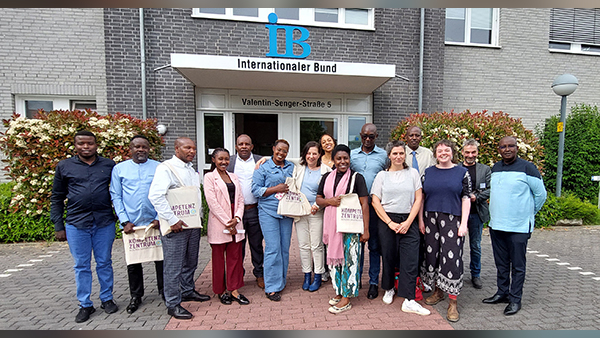
A delegation from Rwanda visited Germany from May 2nd to May 9th as part of the project “proWOOD+ in Ruanda.” implemented by the IB on behalf of Sequa and funded by the BMZ (Ministry of Economic Cooperation and Development). A total of 10 participants took part in the study visit, which focused on vocational education, trade union structures, Occupational Health and Safety (OHS) and practical experiences in the field of woodworking and carpentry.
During their stay, the delegation visited carpentry and vocational training centers as well as trade unions in Kassel, Mainz and Frankfurt am Main. The participants had the opportunity to gain a deeper understanding of how trade unions and professional associations in Germany support workers, strengthen vocational training, and contribute to safe and fair working environments.
The exchange also provided valuable insights into modern woodworking and carpentry practices. Through meetings with professionals, training institutions, and sector representatives, the participants explored working methods, safety standards, and opportunities for professional development within the skilled trades sector.
A Special Focus on Women in the Sector
Particular attention during the visit was given to the role of women in woodworking and carpentry professions. Discussions highlighted the importance of creating more inclusive working environments and encouraging greater participation of women in traditionally male dominated sectors.
The delegation exchanged experiences and best practices on promoting equal opportunities, vocational inclusion, and women’s empowerment in the labor market. The participants emphasized that strengthening women’s access to vocational education and skilled professions is an important step toward sustainable economic and social development.
International Cooperation and Knowledge Exchange
The visit strengthened the cooperation between partners from Rwanda and Germany and created valuable opportunities for future collaboration in trade union development, vocational education and workforce development.
By connecting professionals, institutions, and project participants from both countries, the exchange contributed to mutual learning, intercultural dialogue, and the sharing of practical experiences. The delegation described the visit as highly inspiring and beneficial for future initiatives supporting trade union development and decent work, vocational training, inclusion, and international partnership development.